
Products · AI
AI units for the street, the control room and the cloud
Trainable AI that counts, classifies and tracks vehicles, cyclists and pedestrians on the cameras a council already has — and feeds the signal controller directly.
What it is
One AI, three places to run it
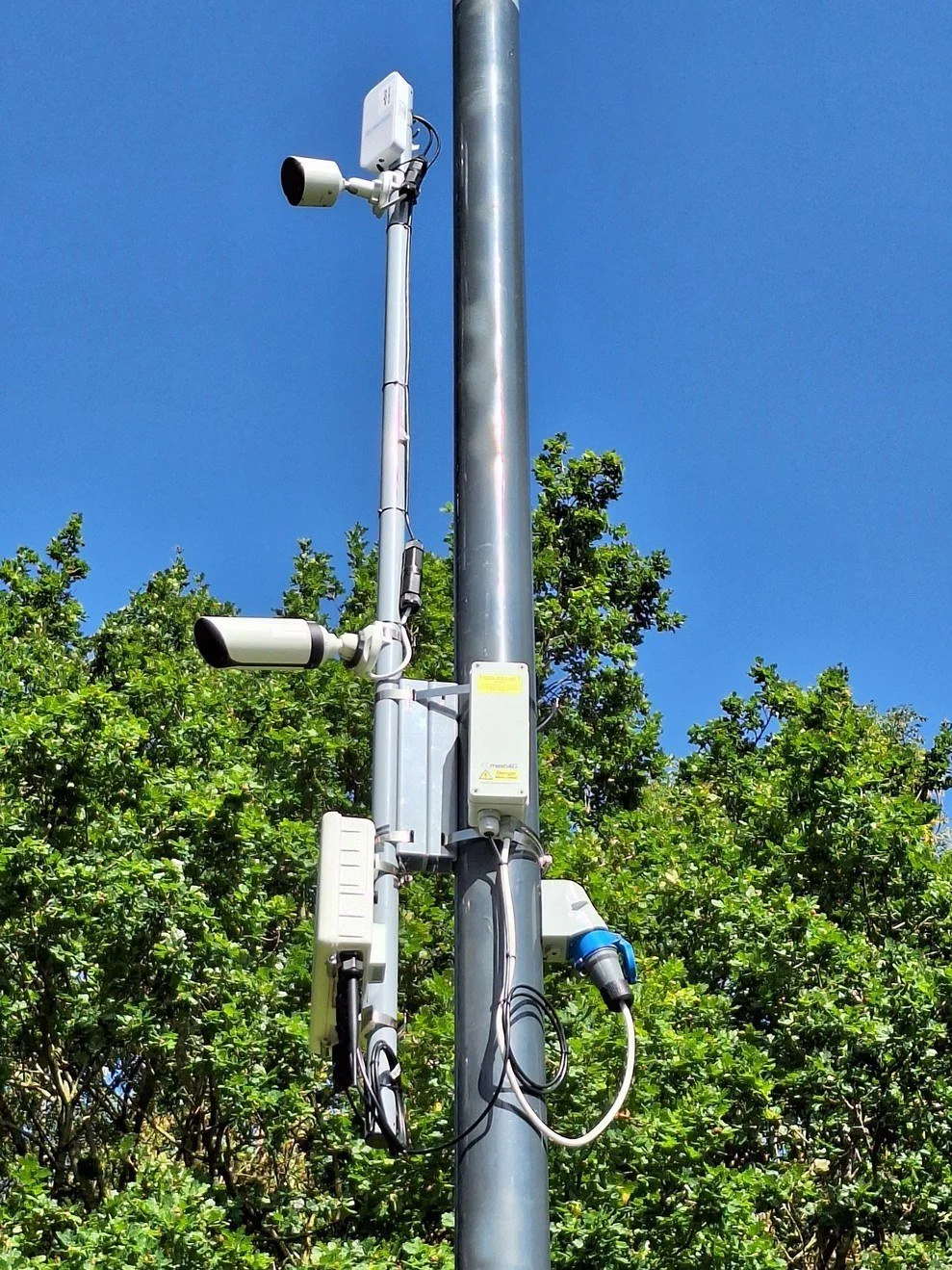
NOW Wireless AI runs the same applications wherever it sits: a roadside unit on the pole or in the cabinet for up to 16 cameras, a control‑room unit for hundreds of cameras, or a cloud service licensed per camera. Units network together to form an AI cloud and respond in real time — a stop‑line detection, a queue alert, a pollution forecast.
Virtual loops drawn on the camera view replace inductive loops cut into the road. Vehicles are classified into up to 17 classes, pedestrians and cyclists get their own signal inputs, and every result goes to the controller over Ethernet or loop‑control lines and to SenseView.
Why councils choose it
Detection without digging up the road
Virtual loops
Stop‑line, approach and queue zones drawn from the desk; moved without a return visit.
Up to 17 vehicle classes
Plus pedestrians and cyclists, counted and tracked — the data today’s junctions never had.
Works on existing cameras
Fixed, zoom and PTZ, very low light and infrared; compatible ONVIF cameras are reused.
Trained for you
The AI is trained per customer on its own views; start with counting and add applications later.
Applications
Start with one, switch on the rest when you need them
Every tier runs the full application set: stop‑line detection and loop replacement, counting and classification, queue and incident detection, turn analysis and desire lines, pedestrian and cycle detection, parking, bus‑lane monitoring, journey‑time prediction, pollution forecasting, ANPR and video‑wall incident focusing.
- Interfaces to UTC and UTMC over Ethernet or 24 V loop‑control lines
- Alerts by email or physical output; everything reported to SenseView
- New applications added by software, not by new hardware
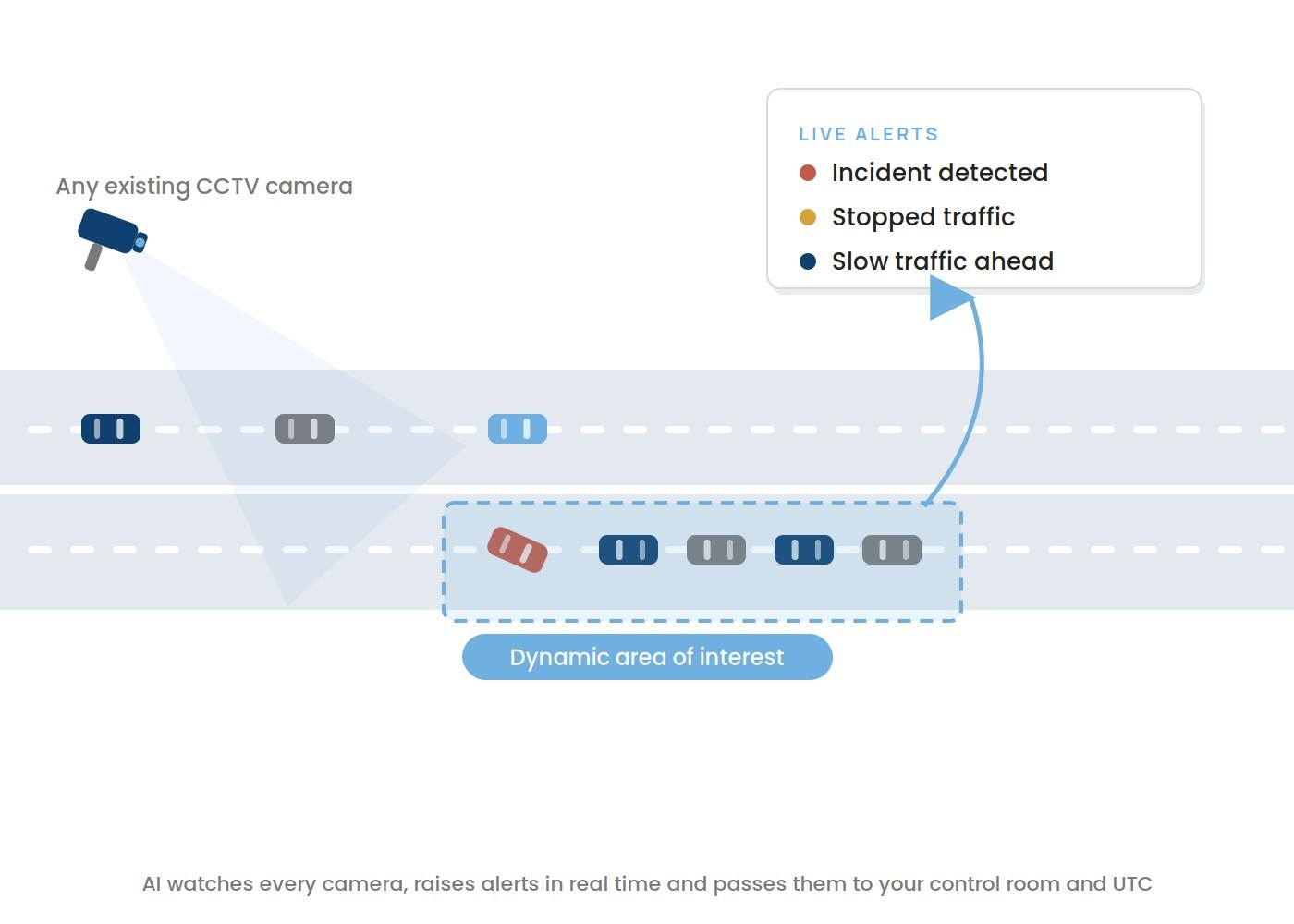
Count and classify by direction at every arm; the same camera gives queue length and turn counts.
The range
What is in the family
Described by where they run, not by model number — the brochure has the detail.
| Product | What it does | Where it goes |
|---|---|---|
| Roadside AI — pole mount | Up to 16 cameras, built‑in router, controller interface; weatherproof housing for the lamp column or signal pole | On the pole |
| Roadside AI — cabinet | The same unit for the traffic controller cabinet, powered from the controller’s supply | In the cabinet |
| Integrated AI pole assembly | Roadside AI, Mesh5G router and Bluetooth detector in one enclosure, with camera options, ready to fit | Rapid junction installs |
| Loop Interface module | Eight loop‑control lines presenting AI detections to the controller as loop inputs | Beside the controller |
| Control‑room AI | Rack server running the same AI on hundreds of cameras; drives video walls with ANPR and incident detection | Control room |
| Cloud AI | The same functions as a service, licensed per camera and per function, results through the SenseView API | Where cameras are already networked |
| AI ANPR and SenseTrace | Plate reading and ghost‑plate detection as software on any tier | Any tier |
Full specifications, interfaces and options are in the product brochure, available on request. No pricing is published; every project is quoted on its requirement.
Where it is used
See the AI at work
AI Traffic covers the applications in depth; Smart Junctions shows the junction built around it; AI on Your Existing Cameras explains how it runs on low‑bandwidth 4G and 5G sites.
Next step
Ask for the AI brochure
Unit tiers, camera compatibility, controller interfaces and the full application list.