
NOW Wireless
Wireless Technology
We design and engineer our own wireless systems in the United Kingdom — communications, sensors, detection and special radio technologies, from standard hardware transformed by our own software through to fully custom‑built radio systems — for cities, mobile operators, the police, the Ministry of Defence and the fire service.
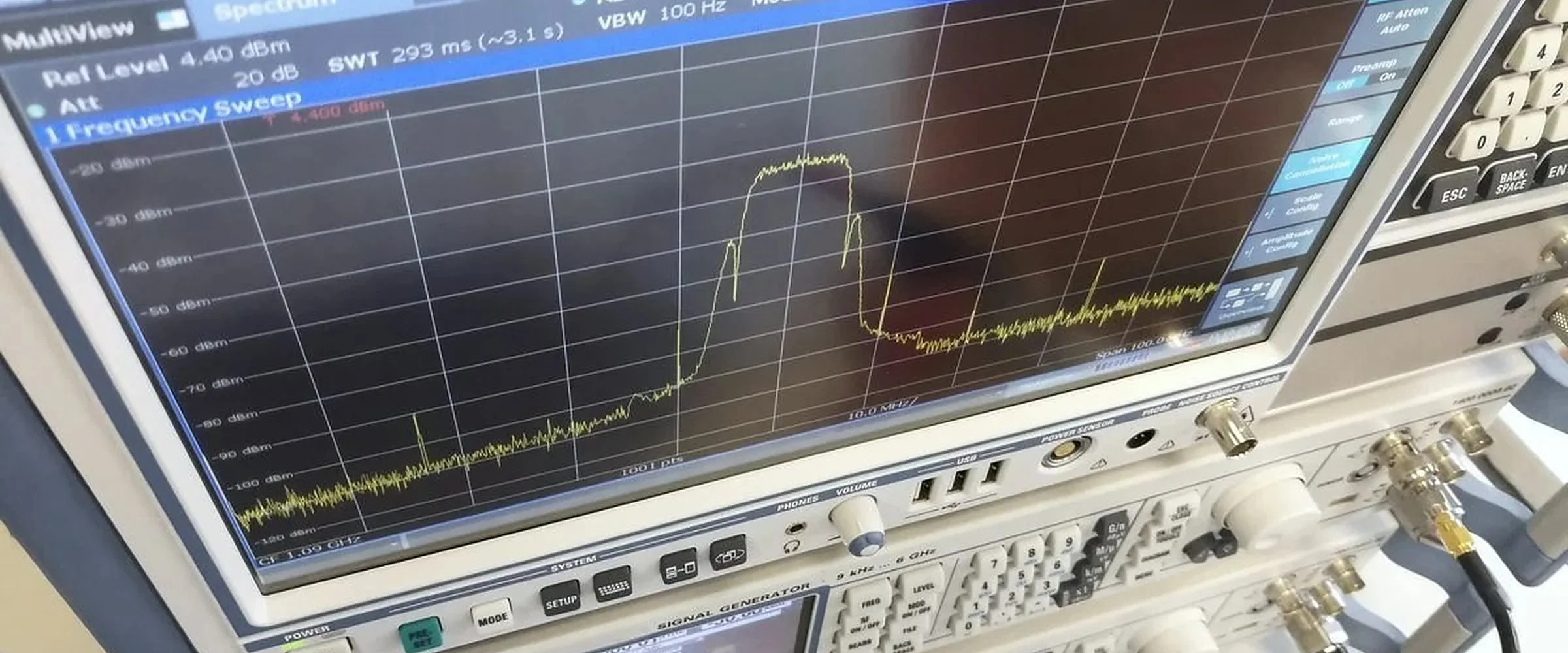
The engineering
Over two decades of UK wireless engineering
NOW Wireless has designed and built its own wireless systems, detectors and traffic systems in the United Kingdom since 2002.
Figures describe deployed networks. Performance depends on site conditions, spectrum availability and network design.
In‑house
The value is in the software, not the metal
Most of our radios start as standard hardware — often standard Wi‑Fi radios. We run our own software on top that makes them do something completely different from what they were designed for. At the other end of the range we build the radio and the antenna as one. What is constant across all of it is the custom software and the system on top.
- Standard hardware, transformed: our software turns a standard radio into a managed, bonded link that does nothing on its own
- Fully custom‑built: software‑defined radios with custom antennas, the whole system designed together
- Communications, sensors, detection and special radio technologies — engineered for the site and the frequency
- Manufactured in the United Kingdom; approved supplier under the Crown Commercial Services framework
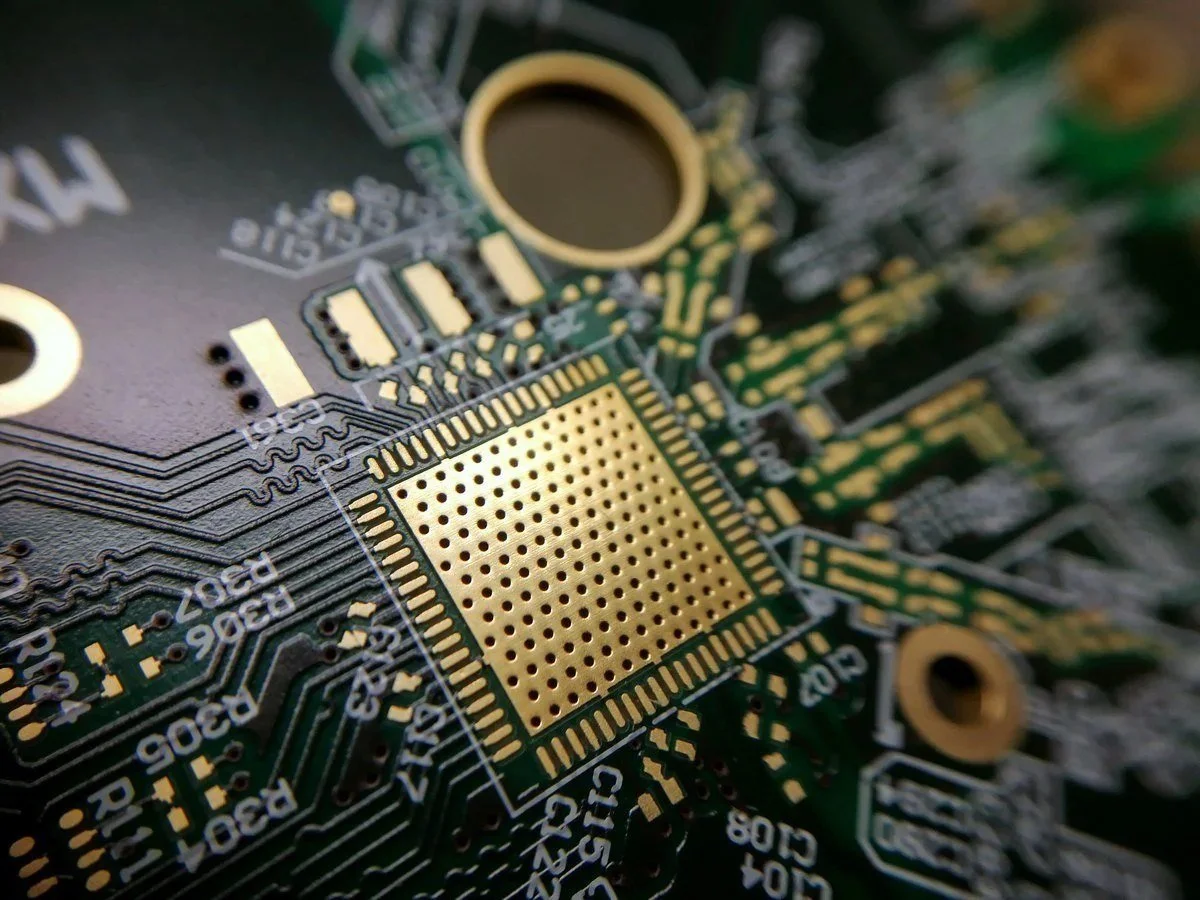
The system is designed together — radio, antenna and software.
QCMR™
Four channels, one link, managed from the centre
Our trademarked Quad‑Channel Military Radio (QCMR™) runs each link over four channels — two in, two out. The central mesh manager makes the whole network operate: it polls every node, keeps every link up, drives frequency hopping and channel planning, allocates channels and channel widths per radio, and switches the radios from ordinary Wi‑Fi operation into our own scheduled mode. Set up once; if a link fails it corrects itself; the centre decides everything.
- Radios ship as bonded pairs with pre‑shared keys — two on a pole do nothing on their own
- Channel plan, widths and hopping allocated per radio from the centre
- Self‑correcting on failure; dynamically re‑planned from the centre
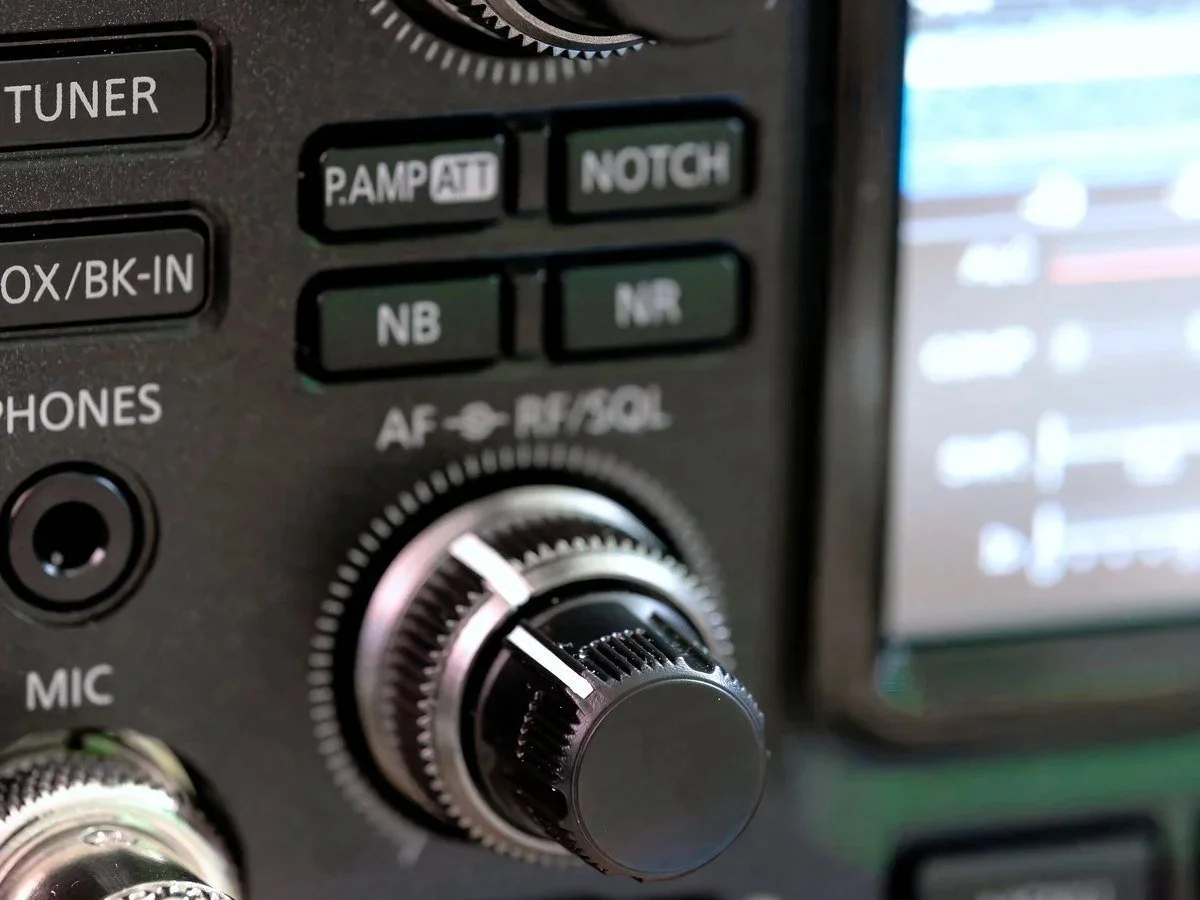
Channel plan, widths and hopping decided from the centre.
The right radio for the job
We work right across the spectrum
Different jobs need different radios — analogue and digital, licensed and unlicensed, short range to long range, from 100 MHz to 60 GHz. We choose the radio the job needs, not the one an off‑the‑shelf product happens to ship with.
- Wi‑Fi and Bluetooth at the access layer, detecting devices for anonymous journey‑time monitoring
- LoRa (Long Range) carrying low‑power sensor data over kilometres
- Global Positioning System (GPS) for location and for monitoring the status of the GPS signal itself
- Licensed and unlicensed bands, short range through to long‑haul links

Analogue and digital, licensed and unlicensed, 100 MHz to 60 GHz.
Backhaul
Getting the data back, when there is no fibre
A cluster is only useful once its data reaches the central system, and not every site has fibre. For the backhaul we use our own managed wireless links: every node gets its own guaranteed share of the link, so it stays reliable and collision‑free across a busy network.
- Our own managed links — guaranteed capacity per node, collision‑free on a busy network
- High‑capacity microwave point‑to‑point links to span distance without a trench
- 4G and 5G mobile networks where public cellular is the best fit
- Fibre backhaul up to 10 Gbps where it exists; headline wireless link rates up to 700 Mbps per hop
- Satellite, including low‑earth‑orbit services
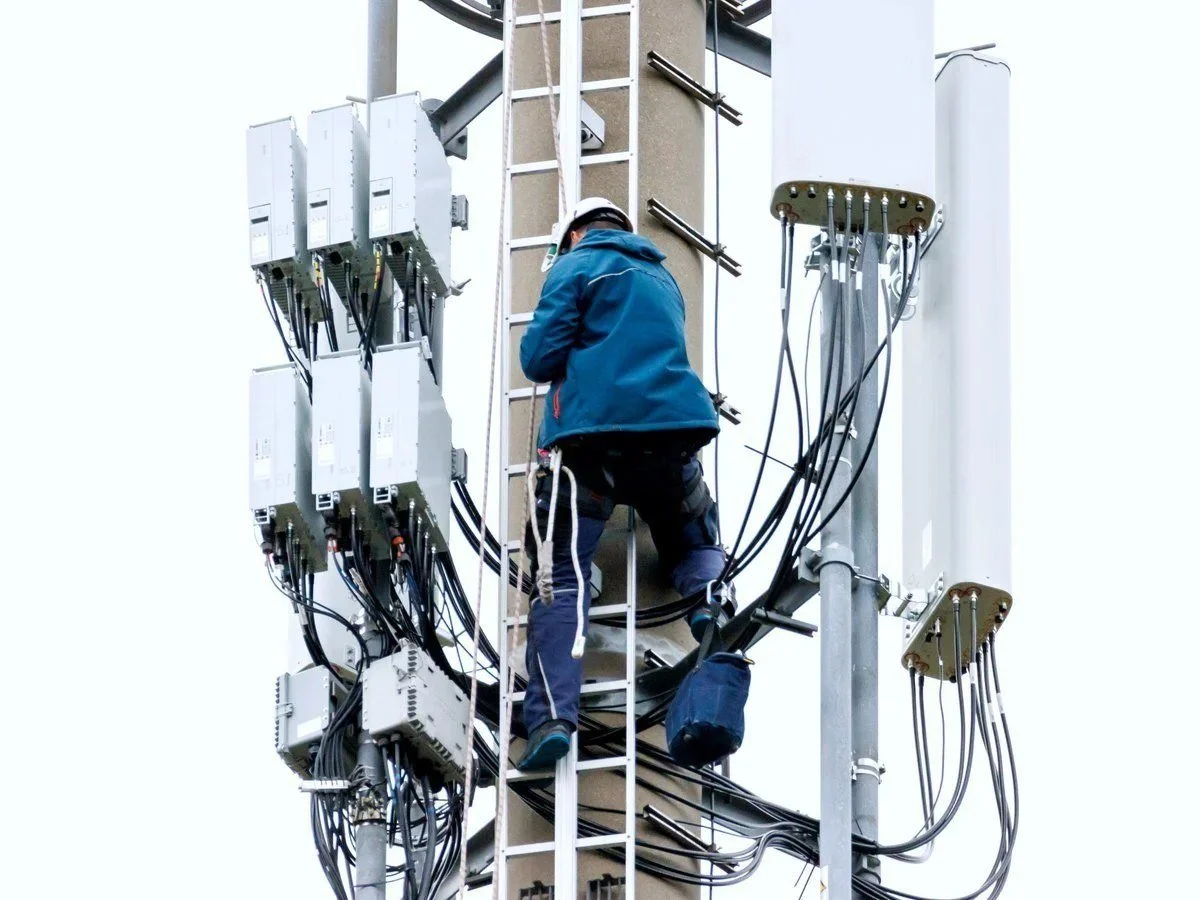
Backhaul from the cluster to the central system.
Detectors
We design the detectors as well as the network
Electronic detection for traffic, presence and movement feeds straight into the system, replacing or complementing traditional in‑road equipment. Because we build both ends, the detector and the network are engineered together rather than integrated afterwards.
- Electronic detection for traffic, presence and movement
- BT Series Bluetooth detectors — single, dual and triple radio
- Detection that replaces or complements in‑road equipment
- Outputs presented to a compatible controller as loop signals or over Ethernet
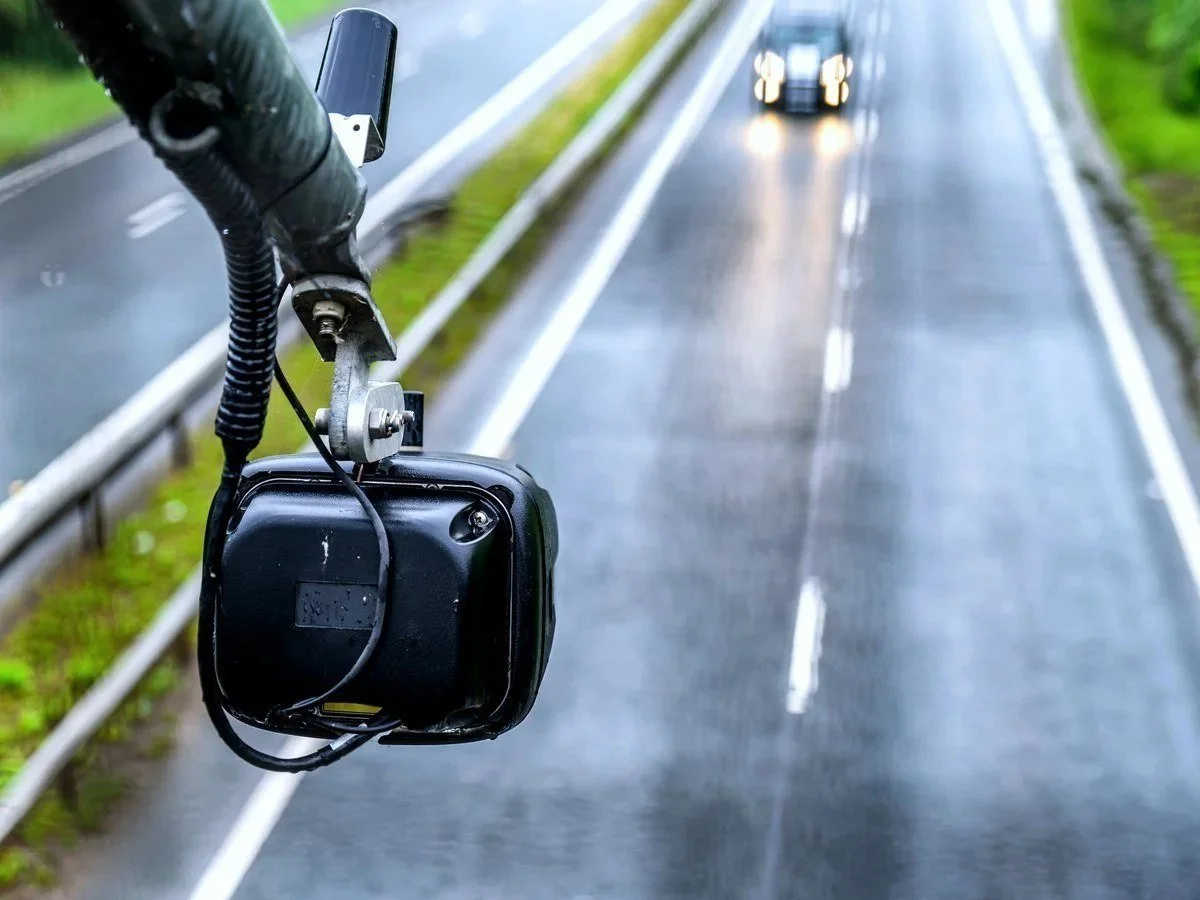
Pole‑mounted detection in place of in‑road equipment.
Traffic light systems
The signal is the heart of a smart junction
We supply the wireless that connects traffic light systems and the detection that replaces in‑road loops, interfacing to the controller through UTMC (Urban Traffic Management and Control). NOW Wireless works with any controller technology and does not supply controllers or signal heads.
- Wireless connecting the signals, cameras and sensors at the junction
- In‑road loops replaced by camera‑based detection
- UTC (Urban Traffic Control), UTMC and MOVA (Microprocessor Optimised Vehicle Actuation) interfaces available
- Works alongside any controller technology; compatibility confirmed during system design
See the Traffic Light Infrastructure page.
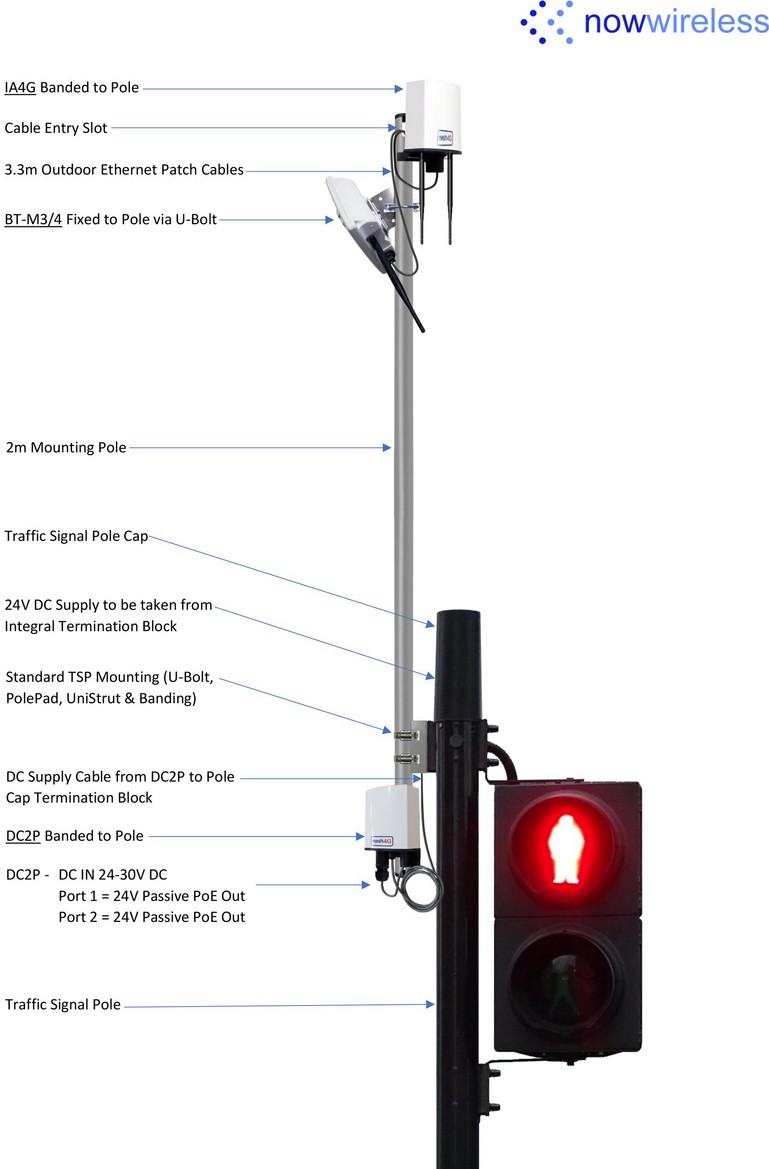
A wireless traffic light: antenna, pole router and power on one signal pole.
Smart clusters
A self‑contained local network
A smart cluster is the radios, detectors, cameras and signals around a junction or area, working together as one unit. Each cluster stands on its own — join them together and you have a citywide system.
- Devices in a cluster share resources: one AI can serve several junctions
- Cameras on one set of signals can stand in for failed loops on another
- Vendor‑agnostic — the equipment at the far end does not have to be ours
- Map a cluster onto a signal‑coordination zone so the zone sees classification, camera and air‑quality data, not just loop presence

A cluster: the radios, detectors, cameras and signals around a junction.
Mesh5G
Join the clusters and you have a city
Adjacent clusters federate into one resilient citywide network — Mesh5G. A central controller shows the state of the whole mesh and lets you configure and optimise every device remotely, over 4G and 5G, VDSL, fibre or satellite. Sharing one backhaul across many devices removes the cost of a separate line to every box.
- Two nodes on one backhaul halves the communications cost; a mesh router and more nodes takes it to around two‑thirds; a full mesh with low‑usage failover reaches up to 90%
- Every link tested continuously — typically once a second — with automatic rerouting and local buffering
- Mesh5G is compatible with earlier Mesh4G equipment, so networks grow without wholesale replacement
- Adaptors for every site — standard, gigabit, CCTV and lamp‑column versions — and the mesh powers other devices on the same pole

Clusters federated into one citywide network.
SenseView Network
The mesh manager runs the network. SenseView Network watches how well.
Historically the central mesh manager did it all. Going forward SenseView Network sits on top: it manages, configures and dynamically controls the network, pulls information continuously from every node to confirm it is operating, and watches each node’s history — alerting to a node that is failing on signal strength or performance before the link drops.
- Act on the warning: move a link to 60 GHz, or switch its channel plan from the 5.4 GHz to the 5.8 GHz band
- Measures performance and can stream the data out — in conjunction with the mesh manager
- One of three SenseView products: SenseView (video), SenseView CR (the large multi‑server deployment) and SenseView Network
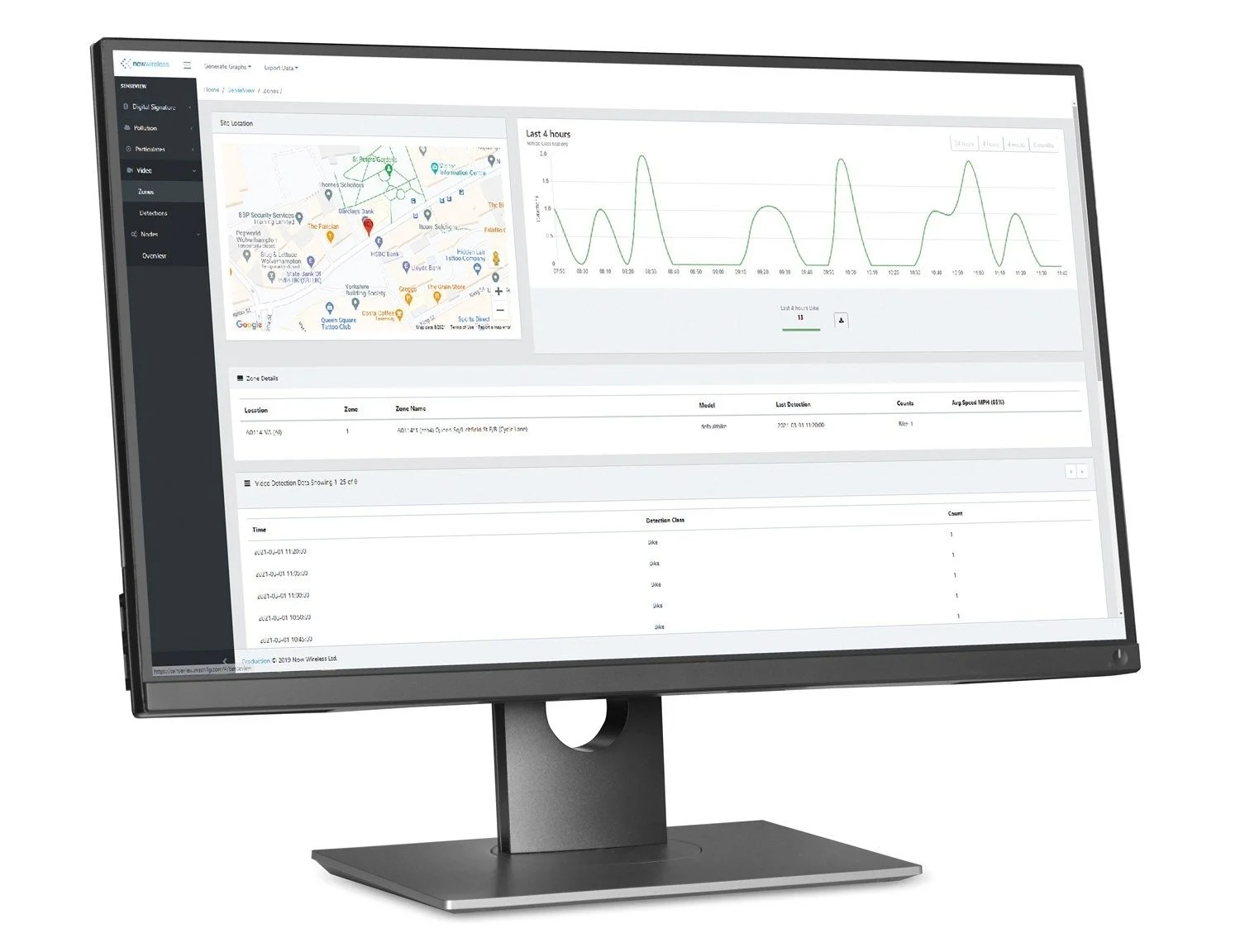
Live availability across the estate.
The mobile space
Carrier‑grade wireless for mobile operators
Wireless technology is not only for cities. A large number of mobile operators use elements of our technology: wireless gateways, text and picture messaging, and our own Multimedia Messaging Service Centre (MMSC) — a complete video switching system for operators, carrier grade, running at very high transaction levels.
- Wireless gateways for mobile operators
- When 3G launched on the Isle of Man — the world’s first — it had voice but no data. NOW Wireless supplied the entire data side, the wireless gateway and all the content, for the trial, for BT; it was later rolled out as 3G across the UK
- SMS and MMS are one application among several — see the Messaging Software page
- Our own MMSC, carrier grade
See the Messaging Software page.
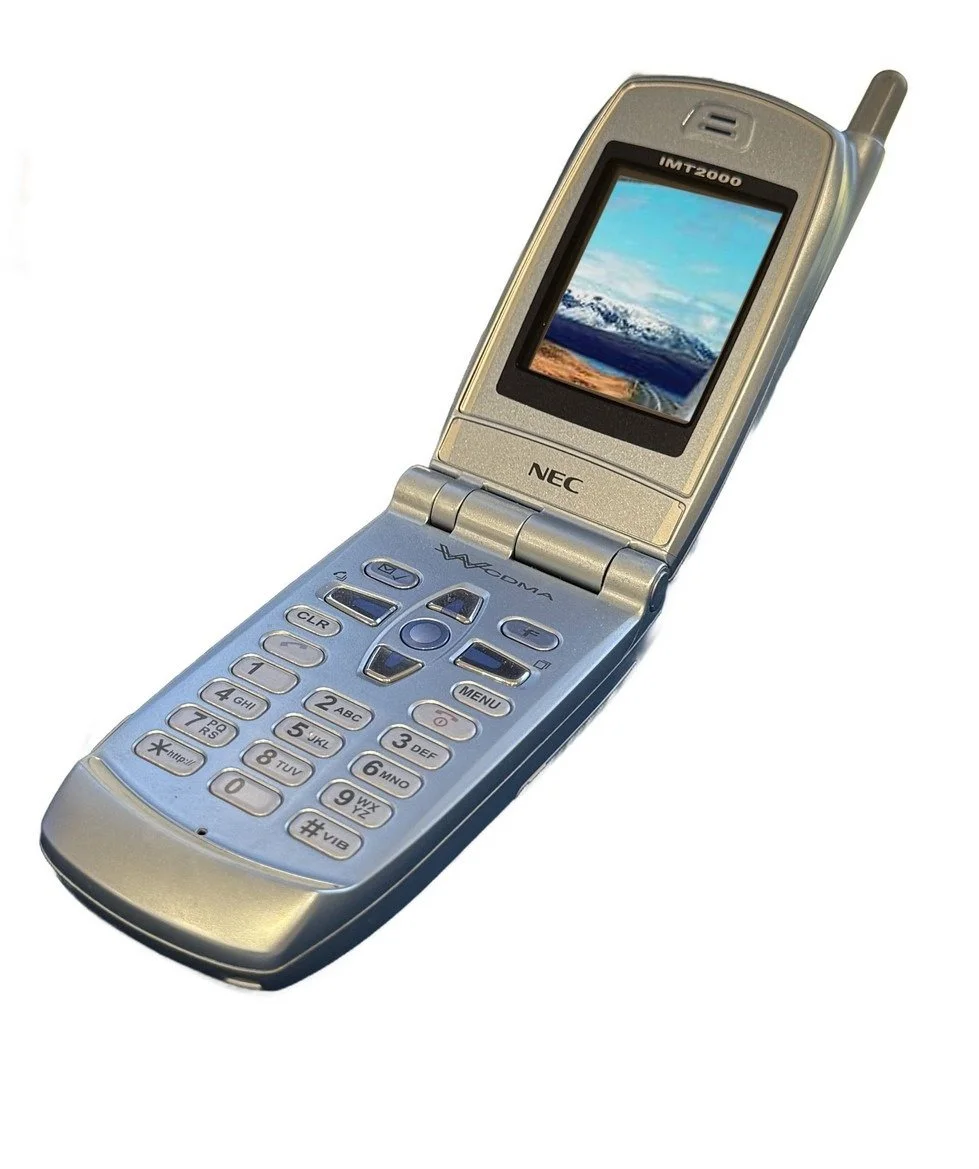
One of the world’s first 3G handsets, from the Isle of Man trial.
Product range
What we build
| Type | Products |
|---|---|
| Intelligent antennas | 5 GHz gigabit antennas; dual‑radio directional and omni for cabinets without ducts; 60 GHz microwave with 5 GHz failover |
| Pole routers | Gigabit mesh routers for traffic lights and lamp columns; high‑power versions for AI and PTZ cameras |
| Cabinet routers | Mesh routers with powered Ethernet ports, fibre ports, dual power supplies and ADSL/VDSL modem options |
| Gateways | 4G and 5G failover gateway with Wi‑Fi hotspot; 5G gateway with protocol switching; LoRa and LoRaWAN |
| Detectors | BT Series Bluetooth detectors; electronic traffic, presence and movement detection |
| Mounting kits | Traffic light, lamp column (banded or easy‑pole), CCTV column, roof and wall — power included |
Operating range −30 °C to +70 °C; 10 to 15 year design lifecycle. Specifications confirmed per design. Contact us for current public‑sector procurement routes.
Get in touch
Wireless engineered around your problem
Talk to us about the wireless link standard kit cannot make — designed, built and supported in the UK, and tied straight into SenseView.